A few days ago, I had dinner with some friends I have known since childhood.
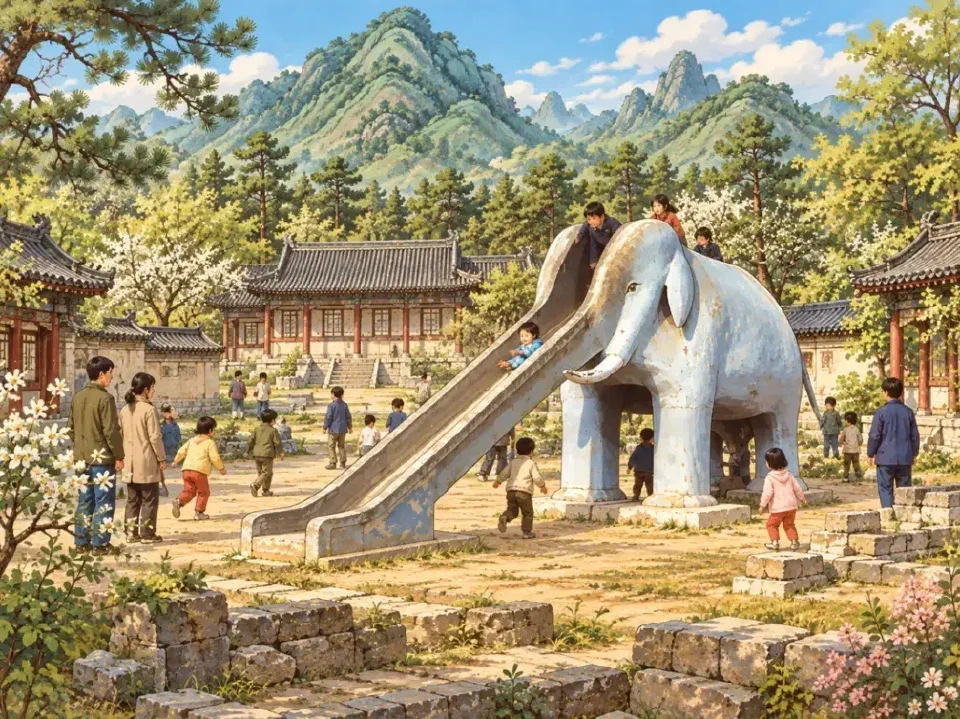
Somehow, the conversation turned to the elephant slide inside Chengde’s Mountain Resort.
Almost at the same time, several of us said:
“You remember that elephant slide, don’t you?”
Of course we did.
As soon as it came up, images that had grown hazy seemed to return all at once.
There used to be a children’s playground in the resort
Many younger people may no longer know that the Mountain Resort once had a children’s playground.
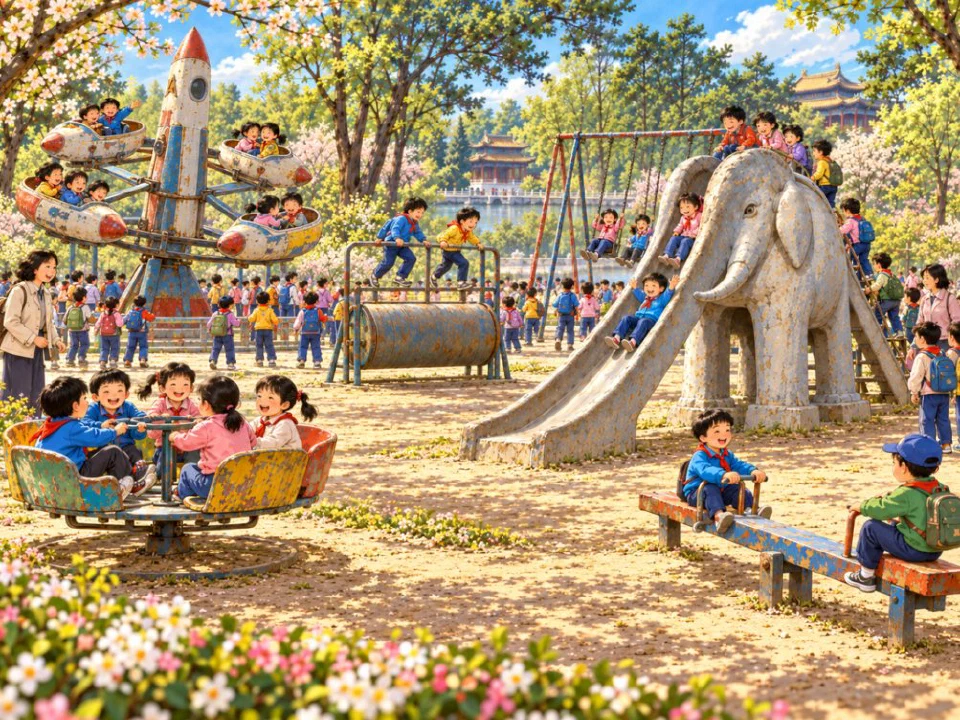
There was a moon rocket, an elephant slide, seesaws, spinning chairs, a rolling drum…
A zoo stood nearby.
For children growing up in Chengde then, the Mountain Resort was much more than the “imperial garden” in our textbooks.
It was our everyday park.
We went on school outings and weekends. When relatives visited, we often took them there too.
A few jiao—a few tenths of a yuan—and a few bags of snacks were enough to make us happy.
Ask people of my generation what they remember most about that playground, and I suspect many would give the same answer:
The moon rocket, and that elephant slide.
The zoo’s animals could keep us talking for ages too. Which animals had been there? Where were their cages? Which ones frightened us most? Perhaps we could slowly piece it all together in the comments.
We lived close to the resort
I attended Nanyingzi Primary School.
Children in Shuangqiao District did not have an endless choice of destinations for school outings. The Mountain Resort was probably one of the most frequent.
Adults entered to see historic sites. For children, it was an entirely different world.
Where could we run? Where were the animals and slides? Where could we buy snacks? Those were the things that mattered.
Even Wenyuan’s Lion Grove garden holds a particular memory for me. I remember our school collecting donations toward its restoration. I cannot recall the exact year or amount—perhaps one or two yuan.
Looking back, that may have been the first time I understood that old buildings have to be protected by each generation in turn.
Later, the playground gradually disappeared
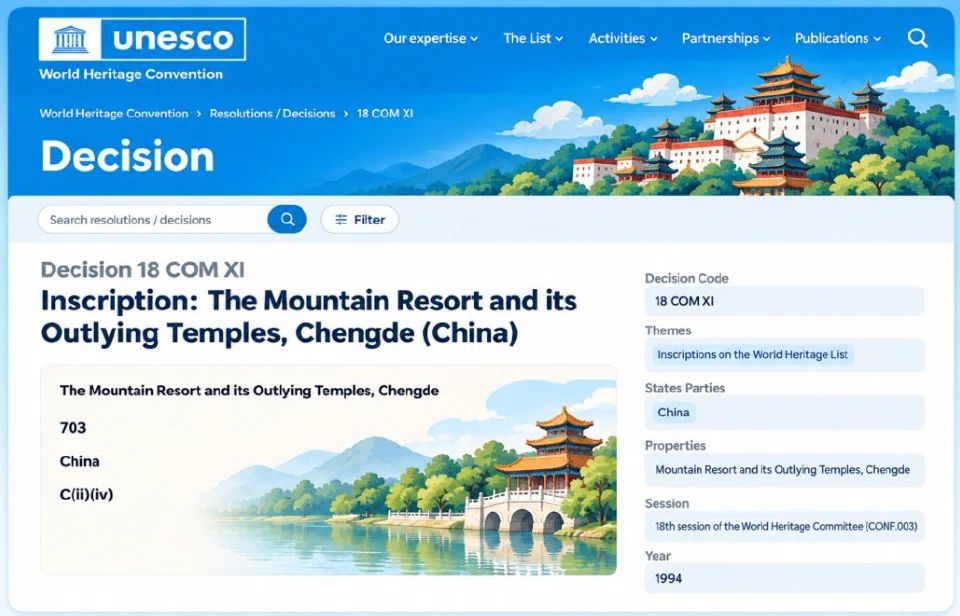
In 1994, Chengde’s Mountain Resort and its Outlying Temples were inscribed on the World Heritage List.
More people came to know the resort through that status. It belonged to Chengde, and to the world.
The playground equipment, zoo and other facilities that did not fit the role of a heritage site gradually disappeared.
From the perspective of heritage conservation, that was inevitable. But as a child of Chengde, I still feel a little regret.
Some things, once gone, can never be found again.
That elephant slide was one of them.
I wanted to “make it” again
Over several evenings, I began searching online.
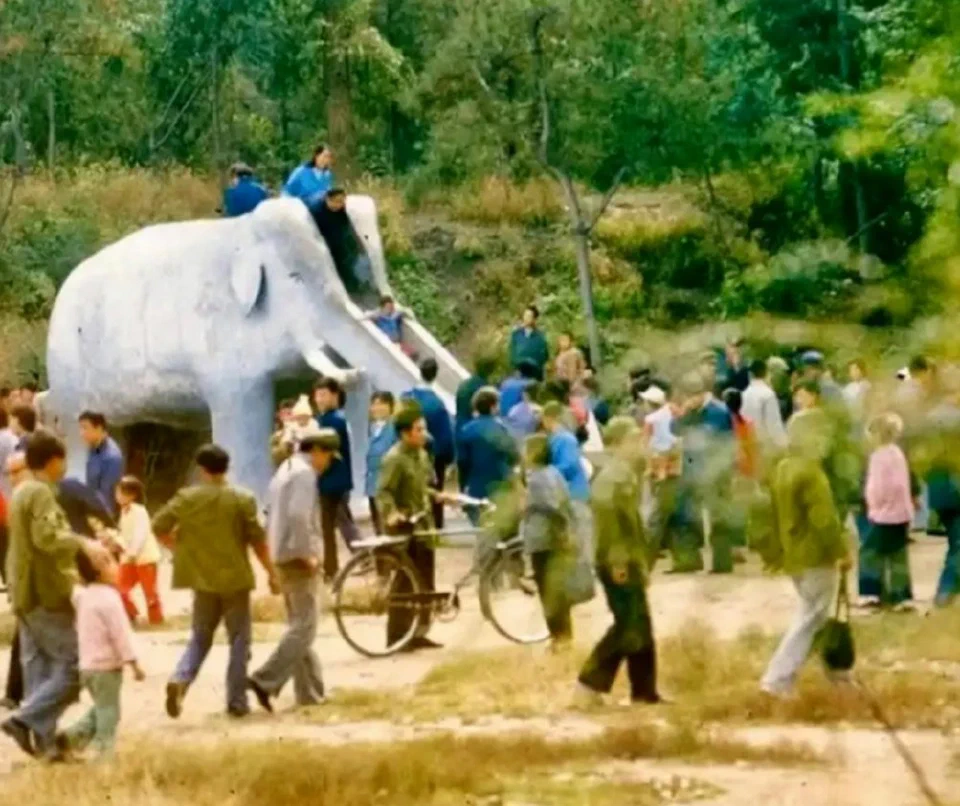
I looked for old photographs, went through saved images and tried hard to remember how it had looked.
There was not much material. Many details had to be pieced together from memory.
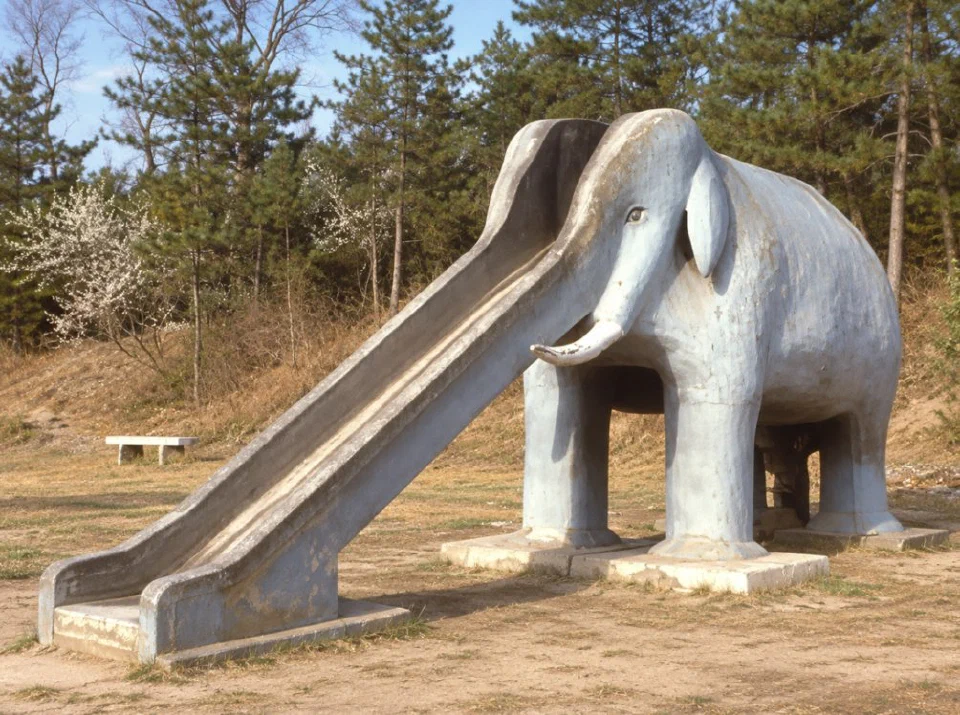
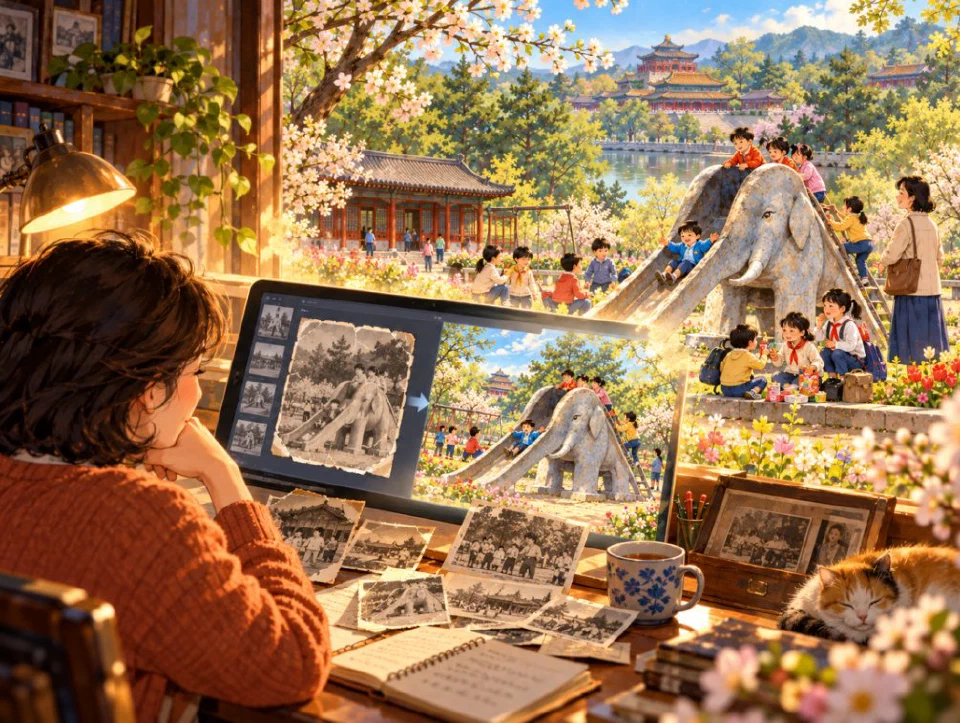
So I tried reconstructing the scene with AI: first the elephant slide, then its surroundings, bit by bit.
In the distance was what was then the youth palace, in the palace area of the Mountain Resort.
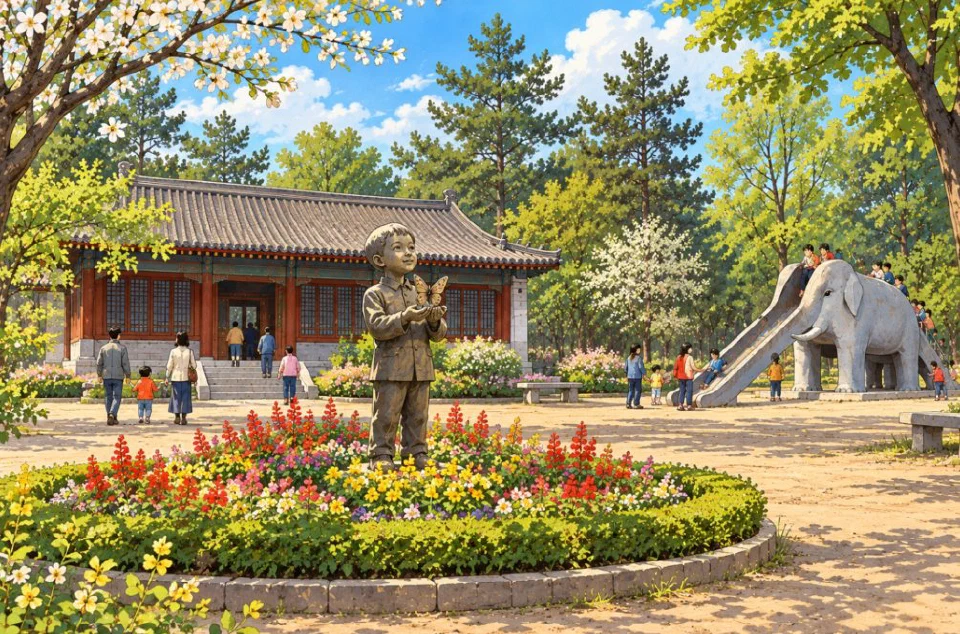
In the flower bed stood the statue many remember of Song Zhenzhong, the young martyr known as “Little Radish Head”: a small child holding a butterfly in both hands, quietly watching other children play.
Looking back, that too seems a kind of tribute.
Closer to the viewer stood the elephant slide, its surface worn and mottled by countless children.
To make it the focus, I placed the slide in the foreground. The proportions and location may not exactly match the original. What I wanted was for someone to recognize it immediately:
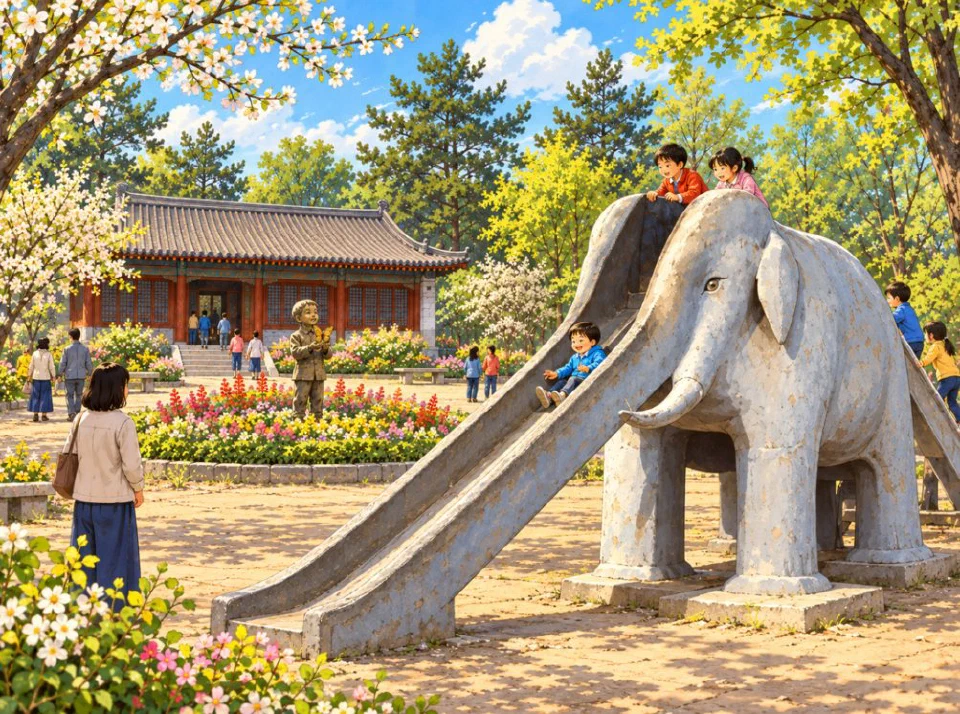
“Yes. That’s it.”
Four or five hours for fifteen seconds
Turning the still image into video brought a new set of problems.
AI would alter people’s movements and the shapes of buildings. The slide changed, the statue moved, and children’s hands and feet developed all sorts of strange distortions.
After generating the video, I brought it into Final Cut Pro and adjusted the details frame by frame.
The finished clip lasted only a little over ten seconds. Finding references, reconstructing the scene, generating the video and editing it took about four or five hours.
I posted it on WeChat Channels.
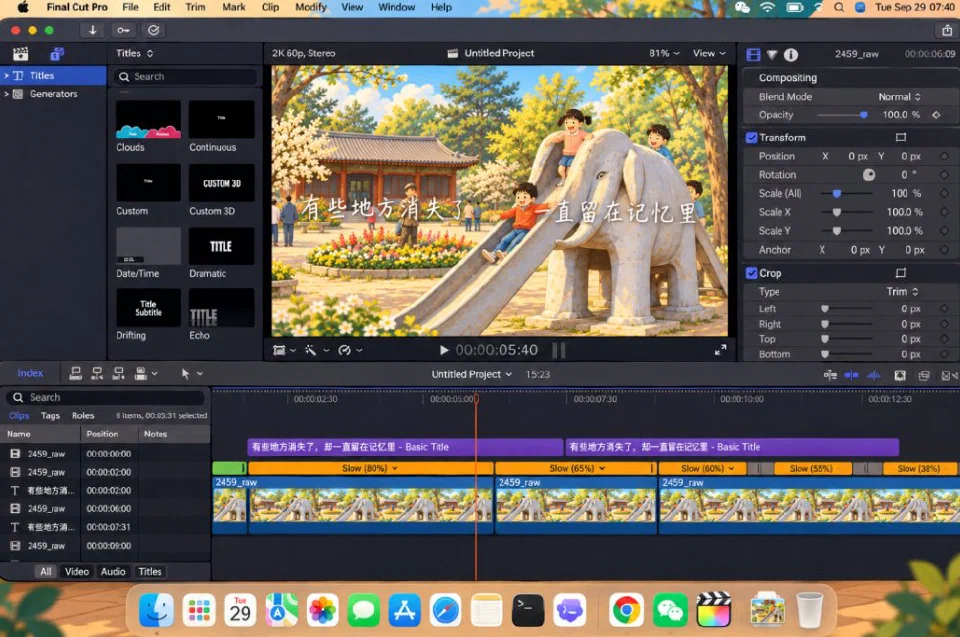
I had only intended to record a personal memory. I had not expected the views to rise so quickly.
We had all remembered the same place
What moved me most was the comments.
Someone had played there as a child. Someone remembered the moon rocket. Others recalled the zoo, or school outings to that very spot.

An eighty-year-old viewer left a long recollection too. His childhood belonged to another era, yet he spoke of the same familiar things: school, teachers, outings, a few coins, a few bags of snacks.
It struck me that this little playground connected several generations of Chengde children.
Those children now live all over China—in Beijing, Shanghai, Guangzhou, Shenzhen—and overseas. Some have retired, some still work, and some have grown-up children of their own.
Yet when the elephant slide reappeared on a screen, decades seemed to compress into a few seconds.
For a moment, we were children again.
Perhaps this is another interesting use for AI
Discussions of AI usually revolve around efficiency, productivity, replacement and transformation. Making this video made me see another kind of value:
It can help us see things that have disappeared.
Scenes never properly photographed, never captured in high resolution, or barely documented at all can gradually reappear through a few blurry photographs, some words and people’s shared memories.
This is not historical footage, and should never be treated as such.
But it can be a reconstruction of memory.
When the picture begins to move, perhaps we recover more than a slide: an afternoon, a school outing, a few coins’ worth of snacks, a parent waiting nearby, and a childhood that once seemed as though it would never end.
Today, the Mountain Resort is a World Heritage Site visited by people from around the world.
For many people from Chengde, it has another identity too. It is the park of our childhood, the destination of school outings, the shared backdrop to generation after generation of children.
Wherever we live now, even thousands of miles apart, that resort and those gardens still connect us across time and distance.
Some places disappear, yet never leave our memories.